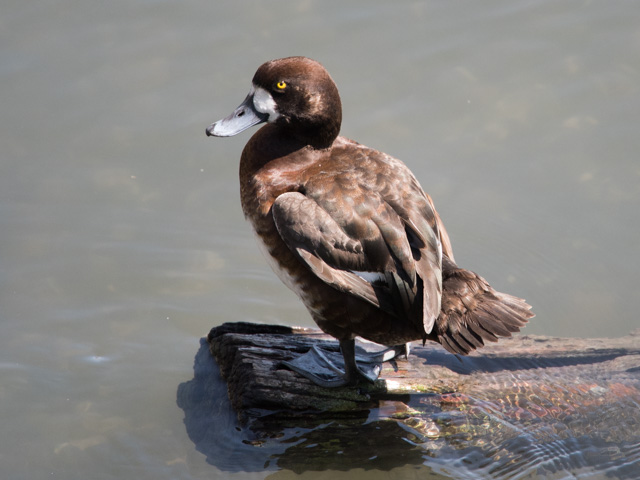
和名: スズガモ, English: Greater scaup, Espanol: Porron bastardo, Binomial name: Aythya marila (Linnaeus, 1761)
Wikipedia
カモ目 > カモ科 > ハジロ属 > スズガモ
Order: Anseriformes > Family: Anatidae > Subfamily: Aythyinae > Genus: Aythya > Species: A. marila
カモの種は多い、スズガモが海で潜水して貝を食うのも自然だ, Being many species in duck family, diving into sea to forage for shellfish of Greater scaup is also natural.
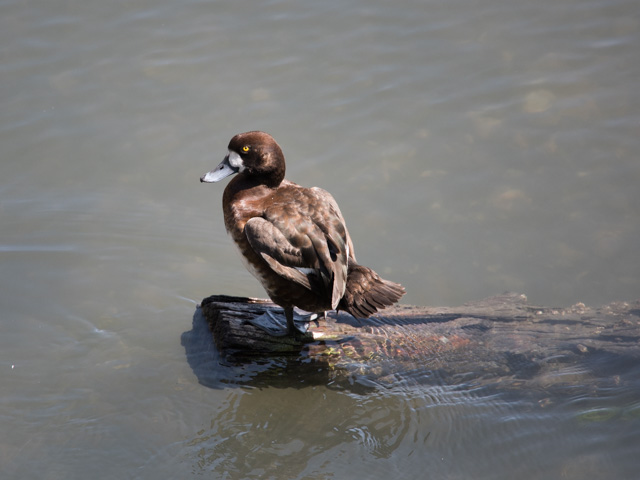
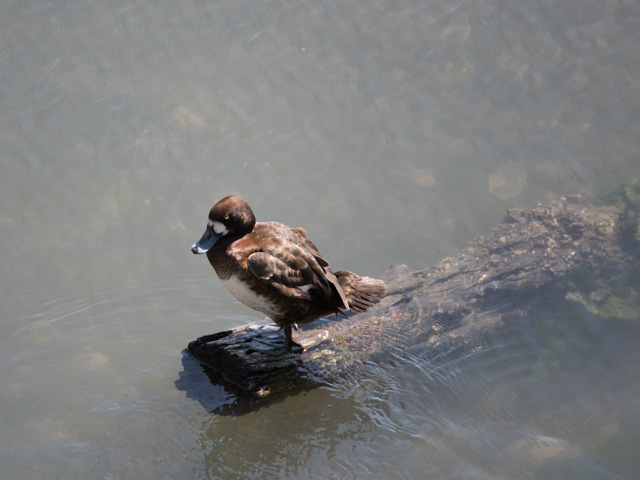
2016年5月8日、習志野市にある谷津干潟公園を散歩した。干潟周囲の遊歩道を一周したが水位が深いためかシギやチドリの姿はほとんどなかった。干潟の一部は普通の沼状態だが、この沼の倒木に1羽のカモが休んでいた。全身の羽毛は褐色でありくちばしの基部に白い班がある特徴からスズガモのメスと思われる。
On May 8, 2016, I strolled in Yatsu-higata Park in Narashino city. I walked the promenade around the tidal flats, but I saw few snipes and plovers probably because the water level was deep. A part of the tidal flat is a common marsh state, and a duck was perching on the fallen tree in the marsh. The duck will be the female of Greater scaup because the plumage of the body is brown and there is white pattern at the base of the bill.
スズガモは海ガモであり、主に潜水して貝類を採取する。そのため、これまで内陸地の公園では見かけなかった。新旧両大陸の北部で繁殖し、冬季は南部に渡り越冬する。日本では東京湾で毎冬大群が見られると言う。
The greater scaup is a sea duck and dives mainly for shellfish. Therefore I did not see this duck before at inland parks. The greater scaup breeds in the north part of Old and New Worlds and migrates southward. It is said that a large crowd of this duck is seen at Tokyo Bay in Japan in every winter.
(谷津干潟公園 Yatsu-higata Park, Chiba, Japan, 09:23, May 8, 2016, D810)
スズガモ(鈴鴨、学名:Aythya marila L.)は、カモ目カモ科ハジロ属に分類される鳥類の一種。
Wikipedia
小型の潜水ガモ(海ガモ)類であり、成鳥はくちばしは灰青色で目は黄色。オスは黒い頭で緑の光沢がある。メスは全体的に褐色。嘴の基部に白い斑がある。名前の由来は、飛ぶときの羽音が金属質で鈴の音に似ていることから。
繁殖地は北アメリカ大陸北部、ユーラシア大陸北部である。冬季はヨーロッパ北部、カスピ海、中国東部、北アメリカ西部及び東部に渡り越冬する。日本では冬鳥として、亜種スズガモが海岸に多数渡来する。日本に渡来する海ガモ類では、最も渡来数が多い種とされる。東京湾、藤前干潟などでは毎冬大群が見られる。北海道東部では夏でも観察される。
主に潜水して採食する。頭から水中に1分近く潜ることもある。アサリを始めとする貝類などを食べるが、水草を食べることも希にある。昼間のみならず、夜間も採食する。貝類を採食する時は、貝殻ごと丸呑みにし砂嚢(砂肝)で消化する。このため、体内に強力で大きな砂嚢を持っている。
The greater scaup (Aythya marila), just scaup in Europe or, colloquially, “bluebill” in North America, is a mid-sized diving duck, larger than the closely related lesser scaup. It spends the summer months breeding in Alaska, northern Canada, Siberia, and the northernmost reaches of Europe. During the winter, it migrates south to the coasts of North America, Europe, and Japan.
Greater scaup eat aquatic molluscs, plants, and insects, which they obtain by diving underwater. They form large groups, called “rafts”, that can number in the thousands. Their main threat is human development, although they are preyed upon by owls, skunks, raccoons, foxes, coyotes, and humans. Greater scaup populations have been declining since the 1980s; however, they are still listed as a species of least concern on the IUCN Red List.