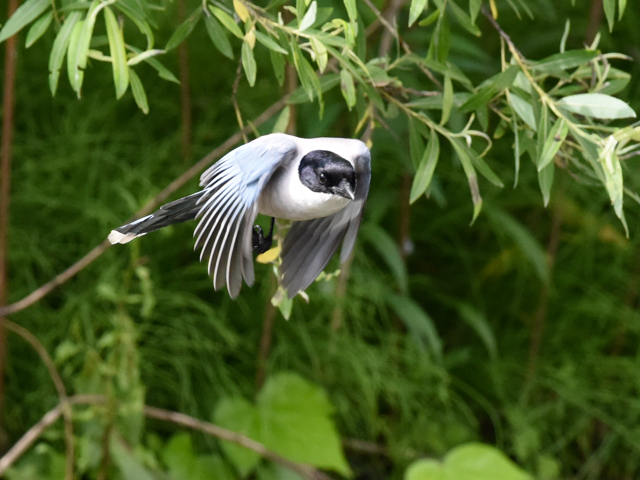
オナガ, Cyanopica cyanus
Wikipedia
和名: オナガ, English: Azure-winged magpie, Espanol: Rabilargo, Binomial name: Cyanopica cyanus (Pallas, 1776)
スズメ目 > カラス科 > オナガ属 > オナガ
Order: Passeriformes > Family: Corvidae > Genus: Cyanopica > Species: C. cyanus
水元公園で見かけたオナガ, Azure-winged magpie seen at Mizumoto Park.
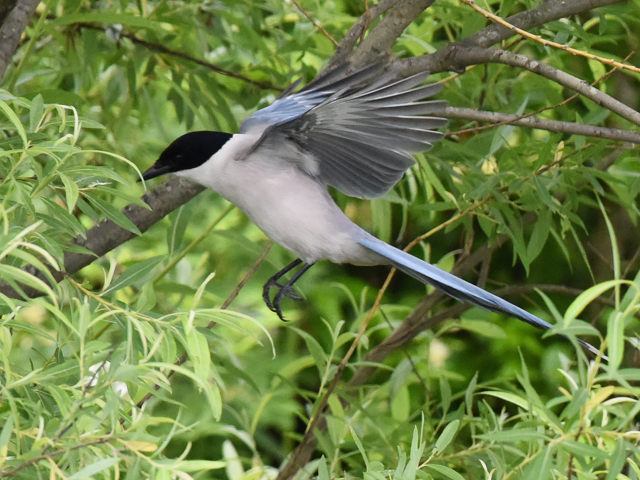
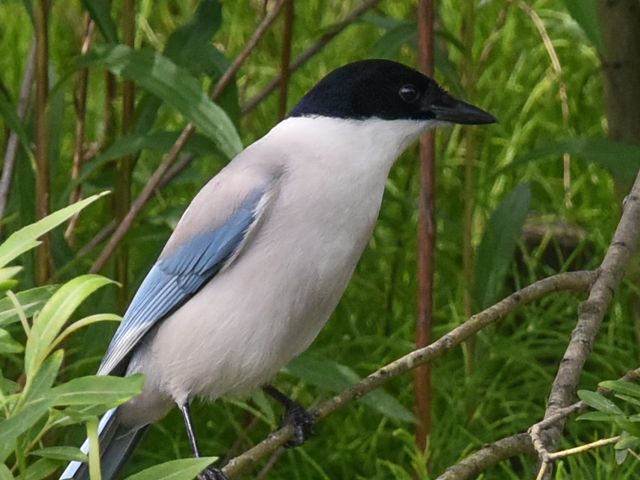
2017年5月16日、水元公園を散歩した。カワセミの里にある林からオナガの鳴き声が聞こえた。めずらしく、オナガが低い木の枝にやってきた。 水色の長い尾羽が良く見える。野鳥観察壁を通して見ているので、さすがのオナガも私に気付いていない様子だ。オナガは飛んで少し遠くの木に移動した。 黒いヘルメットをかぶったような頭部が良く見える。
On March 20, 2017, I strolled in Mizumoto Park. I heard a sound of Azure-winged magpie from the forest at the “Kingfisher’s village”. It was rare that an Azure-winged magpie came down to a low height branch of a tree. You can see long light-blue tail feathers. Watching through the wild bird observation wall, it seems that even the Azure-winged magpie is not aware of me. The magpie flied and moved to a tree a little far. The head which seems to ware a black helmet is seen well.
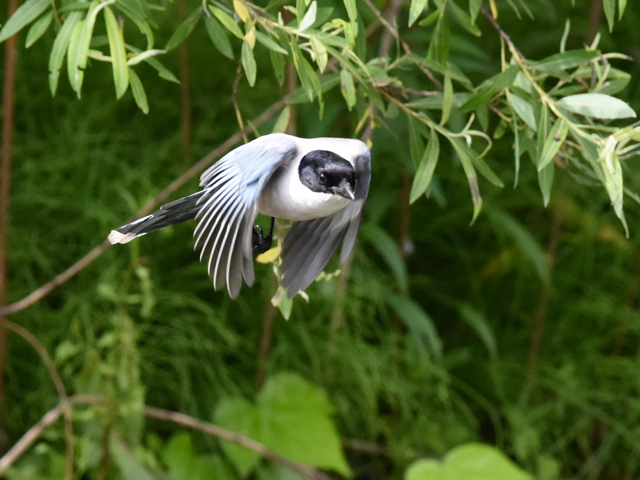
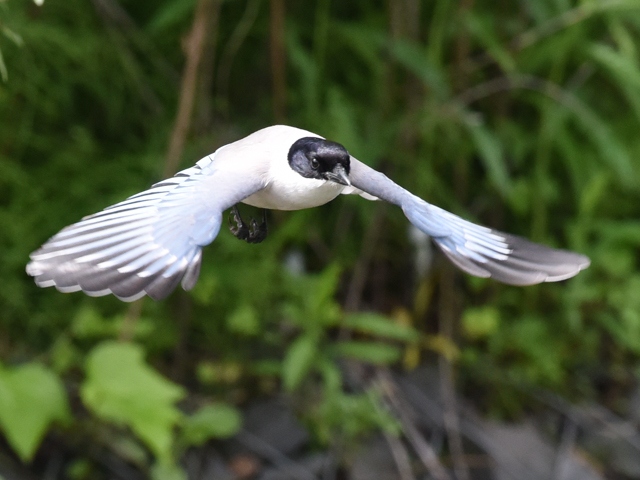
オナガが飛んでこちらに向かって来た。黒い顔の表情が見える。飛ぶオナガを前方から見下ろす珍しい写真を撮れた。
The magpie flied and came toward me. I could see the expression of the black face. I could take rare photos of looking down the flying magpie from the front.
(Mizumoto Park, Tokyo, Japan, 09:08, May 16, 2017, D810)
ユーラシア大陸の東西両端の2つの離れた地域に分かれて分布する留鳥である。 分布の一方はロシア東部、中国東部、日本など東アジアで、もう一方はイベリア半島の一部である。近年の遺伝子分析によれば、 2つの地域個体群は種レベルで区別されることを示した。平地から低山地の比較的明るい森林や竹林を好み、森林に近接する市街地などでも見られる。 食性は雑食で、昆虫、果実、種子等を常食し一部は貯食する。いつも高いところにおり、群れで行動し、カラスの仲間とあって学習能力は高い。 警戒心が強く、また敵に対するモビング(疑攻撃)行動も活発で、巣が襲われた場合などは集団で防衛にあたる。 鳴き声は「ギューイギュイギュイ」「ゲー、ギー」などと汚い大声がよく聞かれるが、これは警戒音声であり、 繁殖期のつがい同士などでは「チューイ、ピューイ、チュルチュルチュル」など愛らしい声で鳴き交わす様子も観察される。
Wikipedia
The great reed warbler (Acrocephalus arundinaceus) is a Eurasian passerine in the genus Acrocephalus. A. arundinaceus are medium-sized birds and are the largest of the European It used to be placed in the Old World warbler assemblage, but is now recognized as part of the marsh and tree-warbler family (Acrocephalidae). warblers. They breed throughout mainland Europe and Asia and migrate to sub-Saharan Africa in the winter. Great reed warblers favor reed beds as their habitat during breeding months, while living in reed beds, bush thickets, rice fields, and forest clearings during the winter. Great reed warblers exhibit relatively low sexual dimorphism, and both genders of the species are similar in appearance. This species mates both polygynously and monogamously.