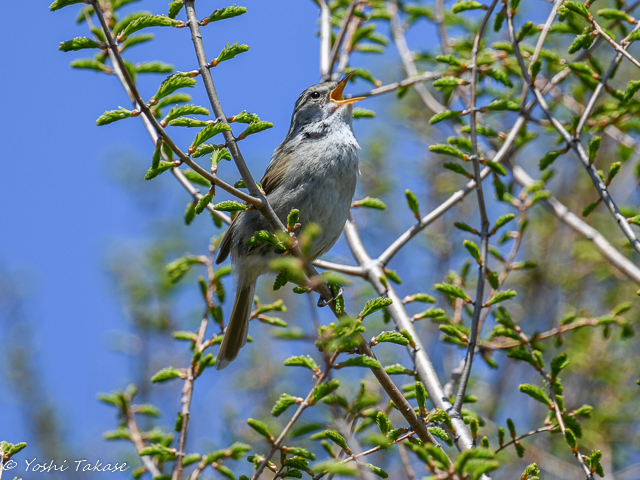
和名: ウグイス, English: Japanese bush warbler, Binomial name: Horornis diphone (Kittlitz, 1830)
Wikipedia
スズメ目 > ウグイス科 > ウグイス属 > ウグイス
Order: Passeriformes > Family: Cettiidae > Genus: Horornis > Species: H. diphone
冬には目立たないが、春になるとその美しい歌声で日本人に親しまれるウグイス, Japanese bush warbler, being inconspicuous in the winter but loved by Japanese with its beautiful singing voice in the spring.
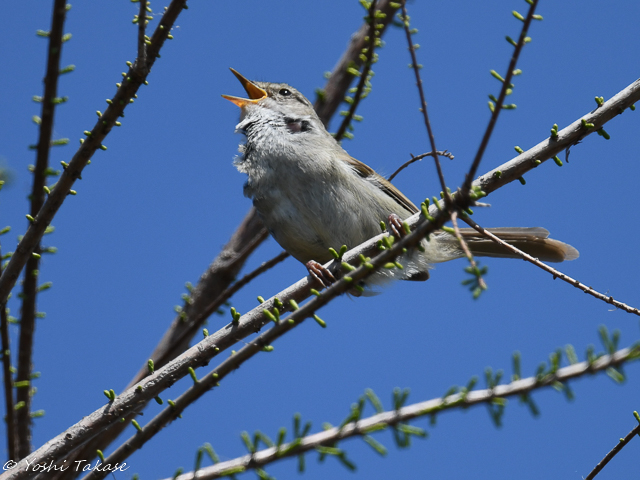
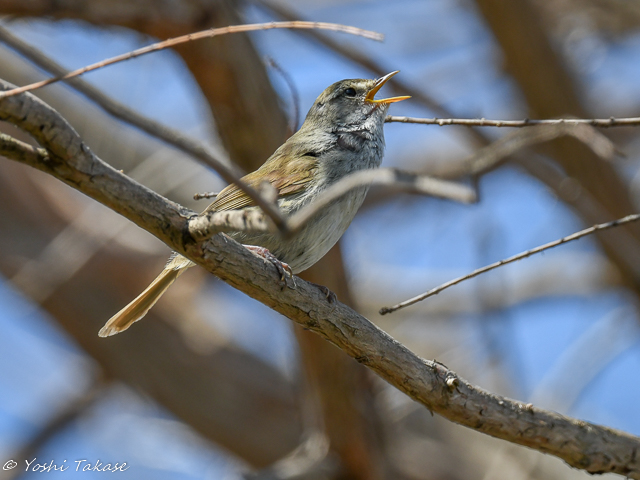
2020年4月10日、近くの柏の葉公園・第2水辺公園を散歩した。四月初旬にここを訪れると、私は毎年ほとんど毎日ウグイスの歌声を聞くことができた。ここは調整池なのでほとんど自然状態になっているため林の木は多くないが下は竹藪になっているためウグイスの良い生息地になっているようだ。
I strolled in nearby Kashiwanoha Second-Waterside Park on April 6, 2020. When I visited here in early April, I was able to listen to the singing of Japanese bush warbler almost every day and every year. Since this is a regulating reservoir, it is almost in a natural state. There are not many trees in the forest, but the bamboo bush below makes it a good habitat for the bush warbler.
ウグイスは喉を膨らませて、よく響く声で「ホーホケキョ」と2, 3回さえずった。ウグイスは数十秒この小枝に留まったが、まもなく別の場所に飛んで姿を隠した。
The warbler puffed out the throat and sang the song like “Hooo-hokekyo” two or three times very clearly. The warbler stayed on this twig for several tens of seconds, but flew away soon to another place and was invisible.
約5分後、ウグイスは移動した小枝でまた歌い始めた。同じように口を大きく開けて喉を膨らませて、よく響く声で「ホーホケキョ」と2, 3回さえずった。
About five minutes later, the warbler began singing again on another twig. The warbler stayed on this twig for several tens of seconds and sang the song similarly.
(Kashiwanoha Park, Chiba, Japan, 09:54, Apr. 10, 2020)