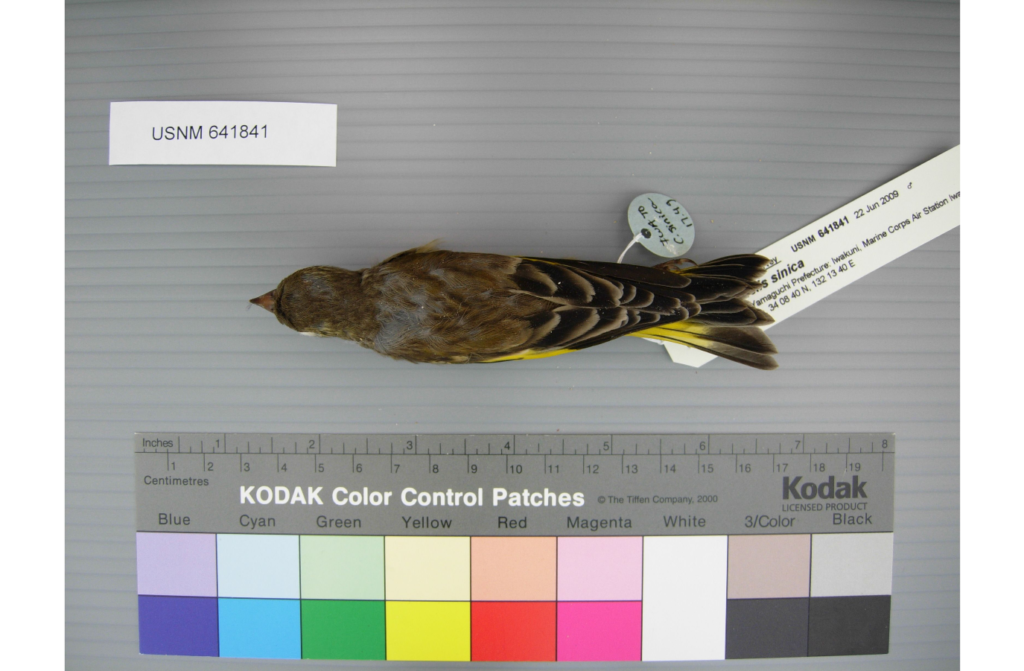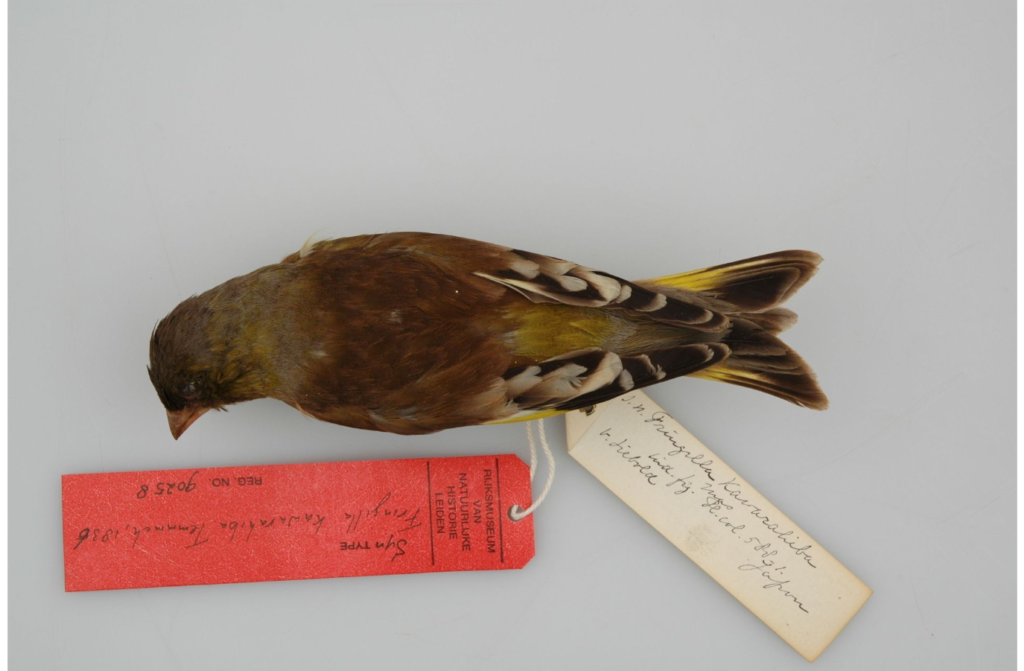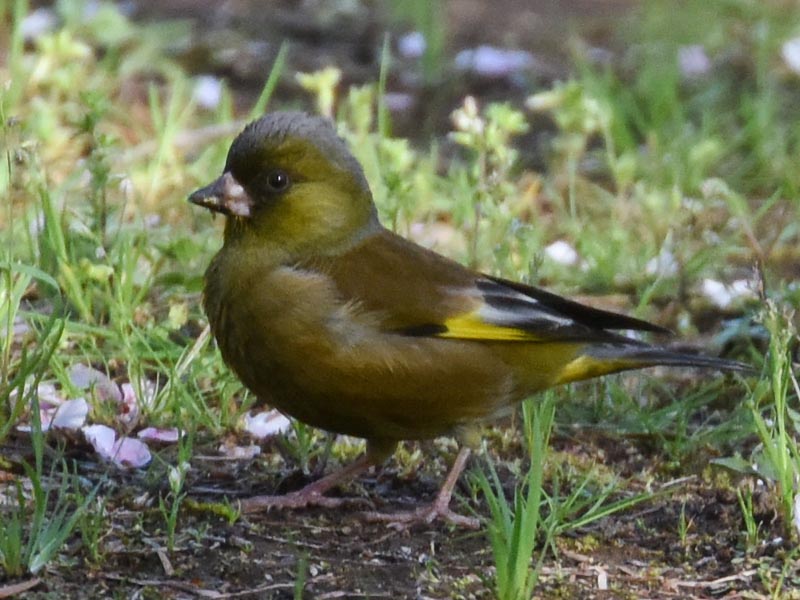
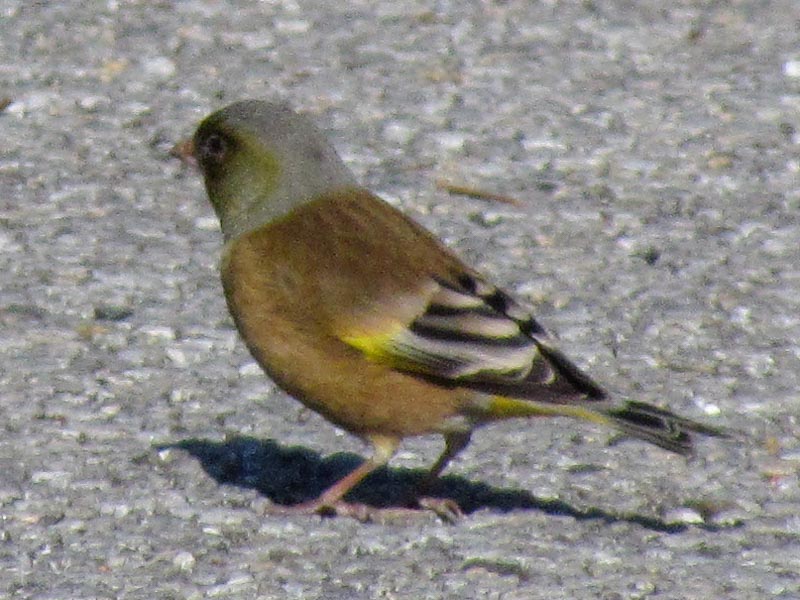
カワラヒワ, Carduelis sinica minor オオカワラヒワ, Carduelis sinica kawarahiba
はじめに, Introduction
日本国内ではカワラヒワの亜種カワラヒワは留鳥であり、亜種オオカワラヒワは主に冬鳥として観察される[1]とある。オオカワラヒワの特徴は、全体に体色が薄く、頭部から肩にかけて灰色がかること[1]、三列風切の白い縁の幅が広いこと[2,3]、渡り個体は留鳥より大きい[4]ことなどが挙げられている。
In Japan, it is said[1] that the Oriental greenfinch subspecies Carduelis sinica minor is a resident bird and the subspecies Carduelis sinica kawarahiba is mainly observed as a winter bird. Characteristics of the C. s. kawarahiba include that it has a thin overall appearance, has a gray tinge from head to shoulders[1], has a wide white edge on its Tertial pattern[2,3], and migratory group is slightly larger than resident group[4].
個人的見解, My opinion
- カワラヒワのオスとメスの羽衣はカモのそれらのような違いはない。メスの羽衣は色調がやや薄い。
- カワラヒワのメスの体色は全体が黄褐色であり頭部から肩にかけて灰色がかる。
- カワラヒワのオスの体色は全体が緑黄褐色であり頭部から肩にかけて緑灰色がかる。
- オオカワラヒワのメスとオスの羽衣の違いは明瞭でない。
- オオカワラヒワの体色は全体が黄褐色であり頭部から肩にかけて灰色がかる。カワラヒワのメスと似る。
- 三列風切の白い外周の幅を比較するとカワラヒワのそれよりオオカワラヒワのそれが広いことが多い[2,3]。個体差があるのでこれだけでは判断は難しい。
- 観察時期は留鳥か冬鳥か判断する大切な情報、春に巣作りするのはカワラヒワである[5]。
- 両者の体の大きさを野外で比較できないが、カワラヒワは見慣れたスズメよりやや小さく見える。
- カワラヒワ、渡り性のカワラヒワ、オオカワラヒワの3群の存在と行動の研究報告[4]がある。
- 遺伝子配列を含め特性値は分布する。亜種の認定には遺伝子配列の有意な差異検証が必要である。
- The plumage of male and female C. s. minor is not as different as that of ducks. The female’s plumage is slightly lighter in color.
- The body color of female C. s. minor is yellow-brown overall, with a gray tinge from the head to the shoulders.
- The body color of a male C. s. minor is greenish-yellow-brown overall, with a greenish-gray tinge from the head to the shoulders.
- The difference in the plumage of female and male of the C. s. kawarahiba is not clear.
- The body color of the C. s. kawarahiba is yellow-brown all over, with a gray tinge from the head to the shoulders. It resembles the female C. s. minor.
- Comparing the width of the white outer periphery of the Tertial pattern, it is often wider in the C. s. kawarahiba than in the C. s. minor[2,3]. Since there are individual differences, it is difficult to judge based on this alone.
- The month of observation is important information to determine whether it is a resident bird or a winter bird. The C. s. minor prepares a nest in the spring[5].
- Although it is not possible to compare the body sizes of the two in the field, the C. s. minor appears to be slightly smaller than the familiar sparrow.
- There is a research report[4] on the existence and behavior of three groups: Habitat differences among resident and migratory Greenfinch.
- Characteristic values, including gene sequences, are distributed. Recognition of subspecies requires verification of significant differences in gene sequences.
以下に筆者が観察したカワラヒワの写真を示す。亜種名は正確である保証はない。
Below are photos of the Oriental Greenfinch observed by the author. There is no guarantee that subspecies names are accurate.
亜種カワラヒワ, Subspecies C. s. minor
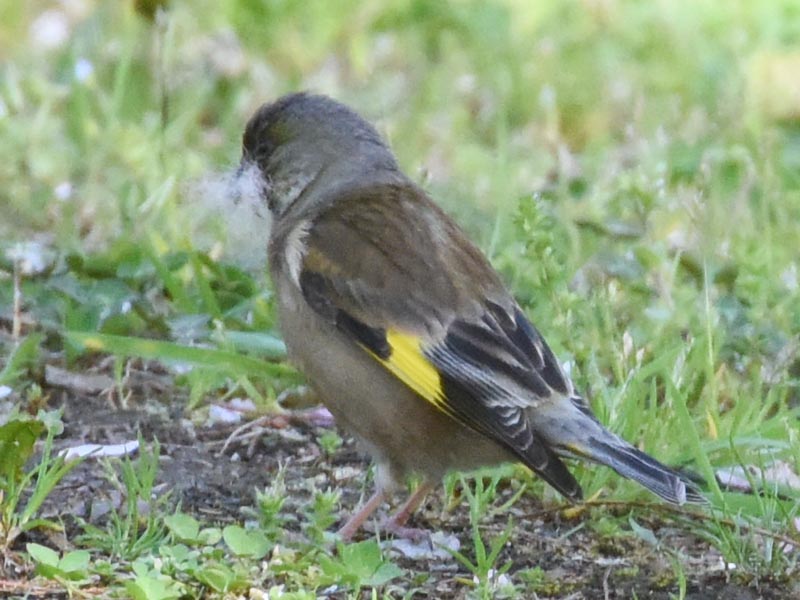
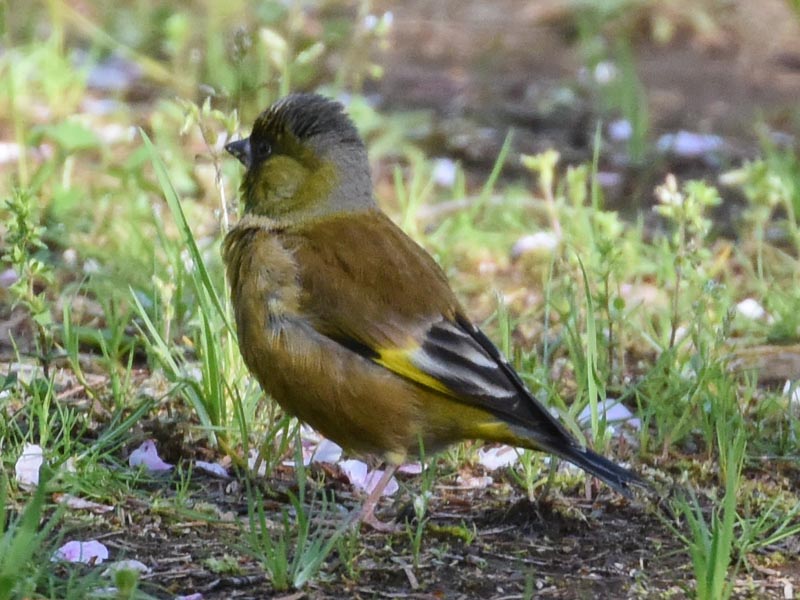
柏市若柴の空き地, 左:メス, 右: オス; Left: female, the color in shade looks different from below; Right: male
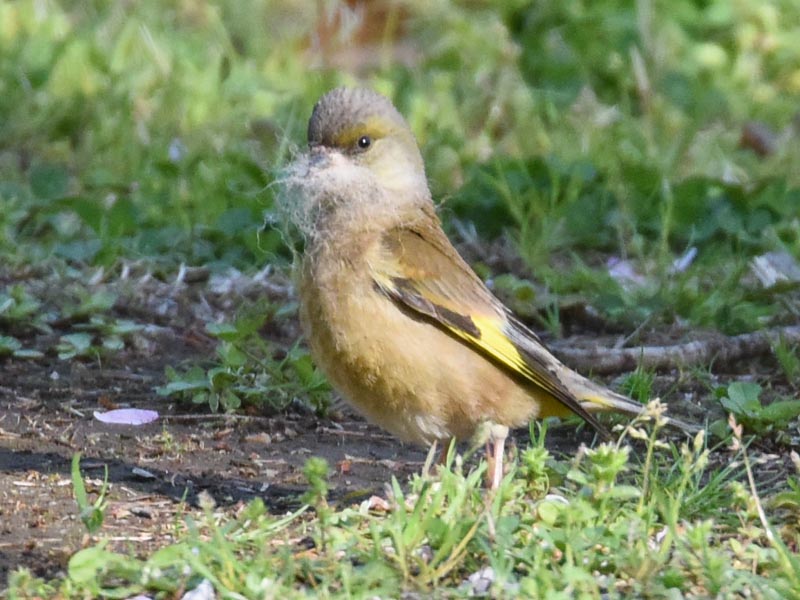
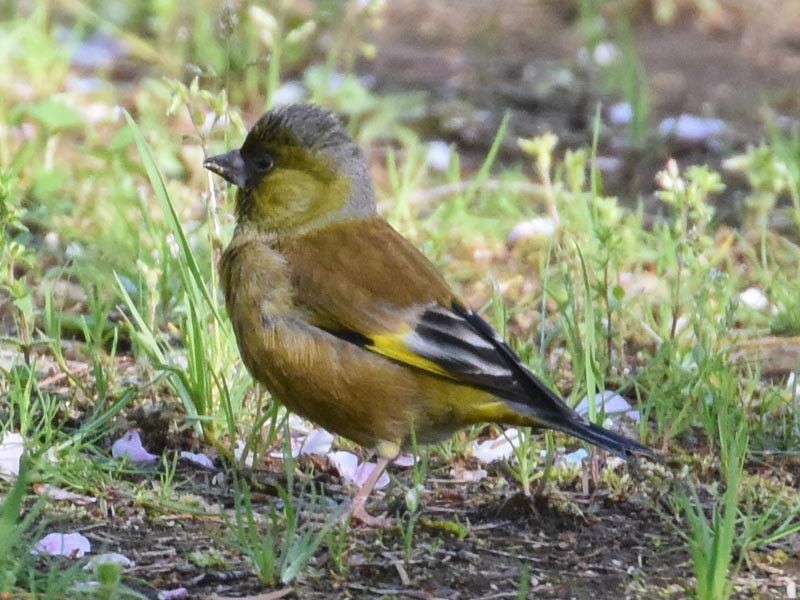
柏市若柴の空き地, 左:メス, 右: オス; Left: female carrying material of nests[5], Right: male
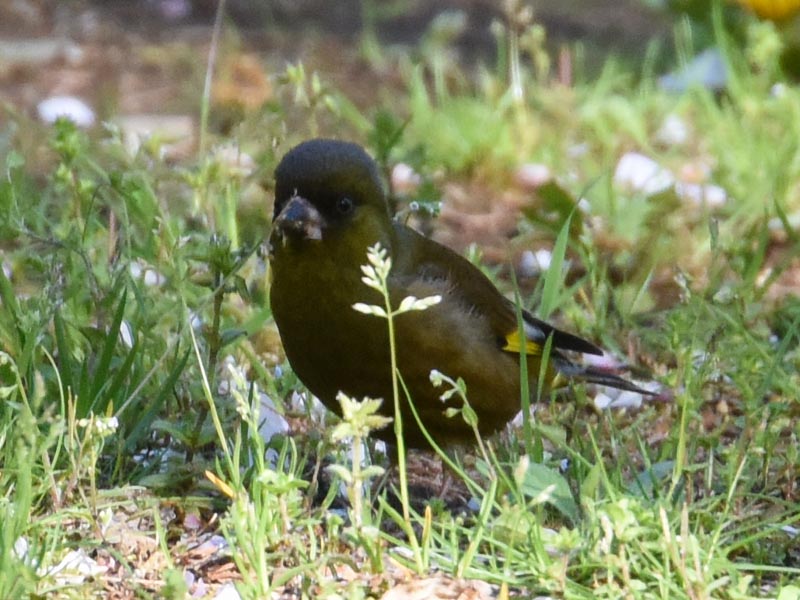
柏市若柴の空き地, 左:オス, 右: オス, 光の状態で体の色調が変わって見える。
| 体の特徴 Body characteristics | 三列風切 Tertial pattern | 観察日、生息地域 、備考 Observation date, habitat area, and notes | |
| No. 1 Female | 体色は全体が黄褐色。頭部から肩にかけて灰色がかる。 スズメよりやや小さく見えた。 The entire body color is yellowish brown. The head and shoulders are grayish. It looked slightly smaller than a sparrow. | 白い外周幅は狭く目立たない。 The white outer periphery is narrow and inconspicuous. | 2016年4月15日。 春に巣材を集めている様子なので留鳥。 April 15, 2016. It is a resident bird as it seems to be carrying material of nests in the spring. |
| No. 2 Male | 体色は全体が緑黄褐色でNo.1より濃い。頭部から肩にかけて緑灰色がかる。 スズメよりやや小さく見えた。 The overall body color is greenish-yellow brown, darker than No.1. The head and shoulders are greenish-gray. It looked slightly smaller than a sparrow. | 白い外周幅はNo. 1よりわずか広いが目立たない。 The white outer periphery is slightly wider than No. 1, but it is not noticeable. | 2016年4月15日。 No. 1とペアらしいので留鳥。 直射日光、日陰、光の方向で羽衣の色合いや濃さが変わって見える。羽毛にある微細な構造によって生じる構造色成分もあるように見える。 April 15, 2016. It seems to be paired with No. 1, so it’s a resident bird. The color and density of the plumage appears to change depending on direct sunlight, shade, and the direction of the light. There also appears to be a structural color component caused by micro-structures in the feathers. |
観察日:2016年4月15日、場所:柏市若柴の空き地,、個体数:オスとメスのペアらしい2羽、メスは巣材を集めている様子なので留鳥、メスの三列風切の白い外周幅は狭く目立たない。オスの三列風切の白い外周幅はメスよりわずか広いが目立たない。メス、オス共、大きさはスズメよりやや小さいように見えた。このような特徴を総合すれば、この2羽は亜種カワラヒワまたはコカワラヒワ、学名 Carduelis sinica minor[1]であることは間違いないだろう。
亜種オオカワラヒワ, Subspecies C. s. kawarahiba (Grey-capped Greenfinch)
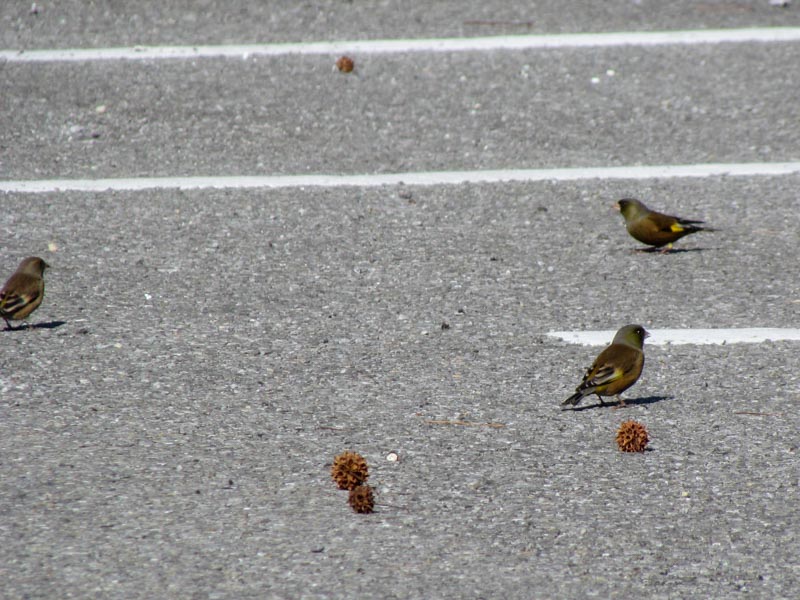
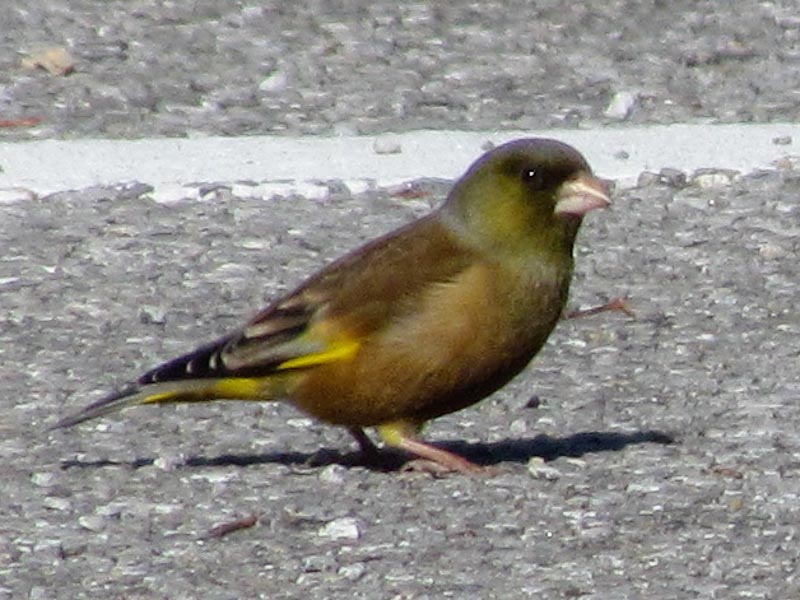
A group of three birds that gathered in the parking lot of Kashiwanoha Park in winter.
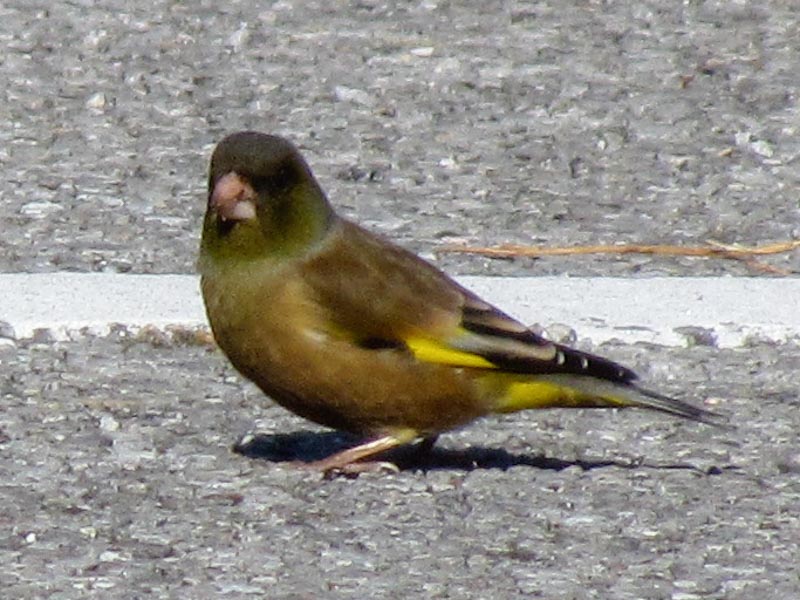
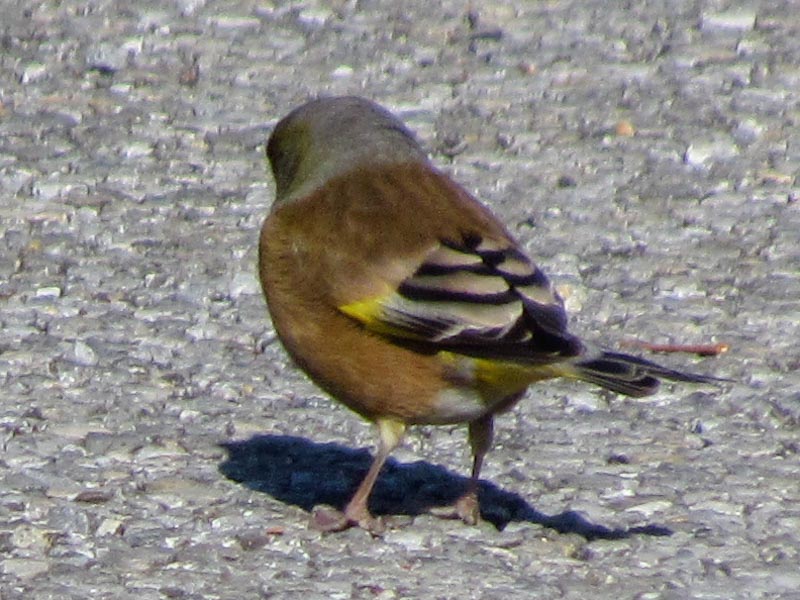
One of a group of three birds that gathered in the parking lot of Kashiwanoha Park in winter.
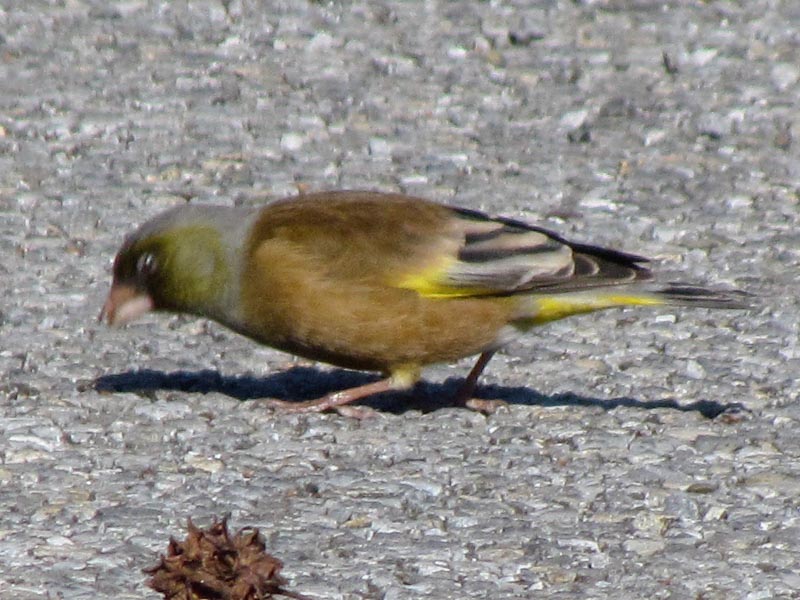
One of a group of three birds that gathered in the parking lot of Kashiwanoha Park in winter.
| 体の特徴 Body characteristics | 三列風切 Tertial pattern | 観察日、生息地域 、備考 Observation date, habitat area, and notes | |
| No. 3 Male | 体色は全体が黄褐色。頭部から肩にかけて薄緑灰色がかる。 スズメよりやや大きく見えた。 The entire body color is yellowish brown. The head and shoulders are pale greenish-gray. It looked slightly larger than a sparrow. | 白い外周幅は5個体中で一番広く目立つ。 The white outer periphery is the widest and most noticeable among the five individuals. | 2011年12月30日。 冬に柏の葉公園の駐車場に集まった3羽のグループの1羽。日本に越冬飛来らしい。 December 30, 2011. One of a group of three birds that gathered in the parking lot of Kashiwanoha Park in winter. Apparently, they migrated for wintering in Japan. |
観察日:2011年12月30日、場所:柏の葉公園の駐車場,、個体数: 3羽、三列風切の白い外周幅はNo. 1とNo. 2より広く目立つ。大きさはスズメよりやや大きいように見えた。オスと思われる、No. 2のオスと比較すると、全体に体色が薄く、頭部から肩にかけて灰色がかっている。このような特徴を総合すれば、この3羽は亜種オオカワラヒワ、学名 Carduelis sinica kawarahiba, 英名 “Grey-capped Greenfinch”[3]であることは間違いないだろう。
亜種オオカワラヒワまたは渡り性のカワラヒワ, Subspecies C. s. kawarahiba (Grey-capped Greenfinch) or migratory C. s. minor
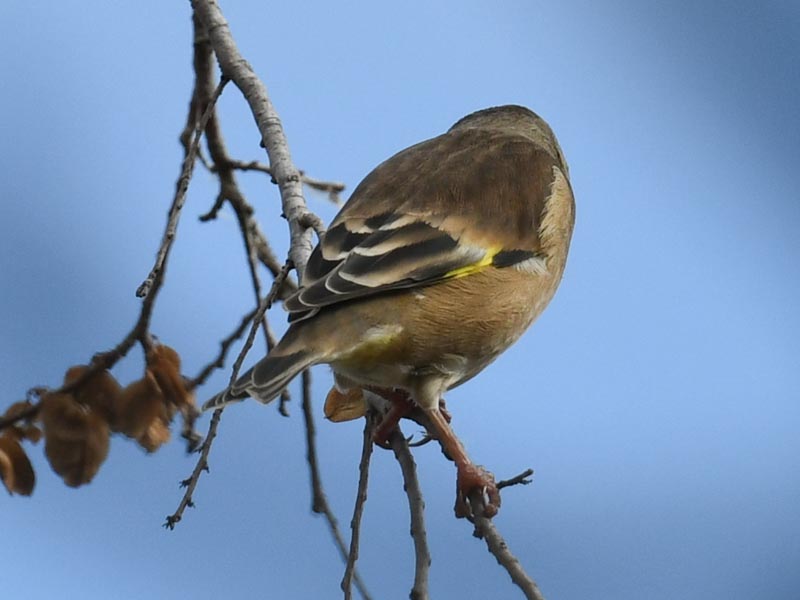
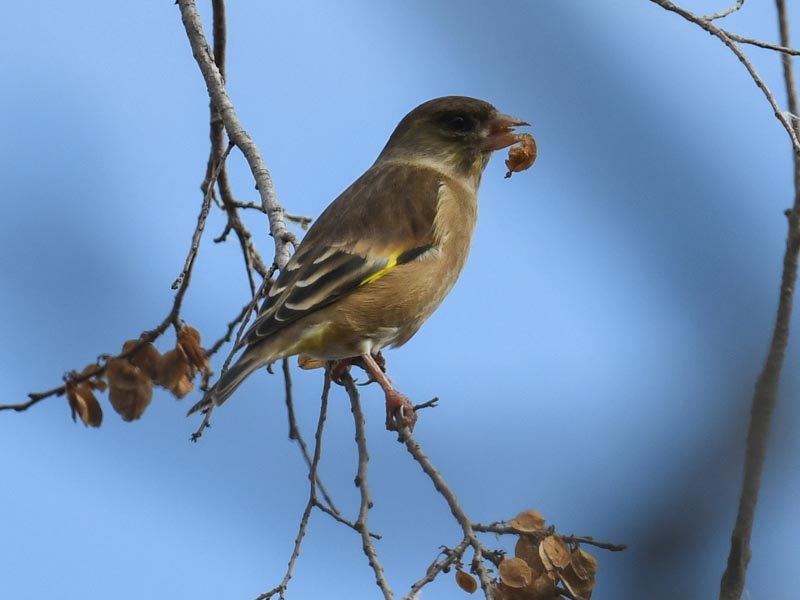
| 体の特徴 Body characteristics | 三列風切 Tertial pattern | 観察日、生息地域 、備考 Observation date, habitat area, and notes | |
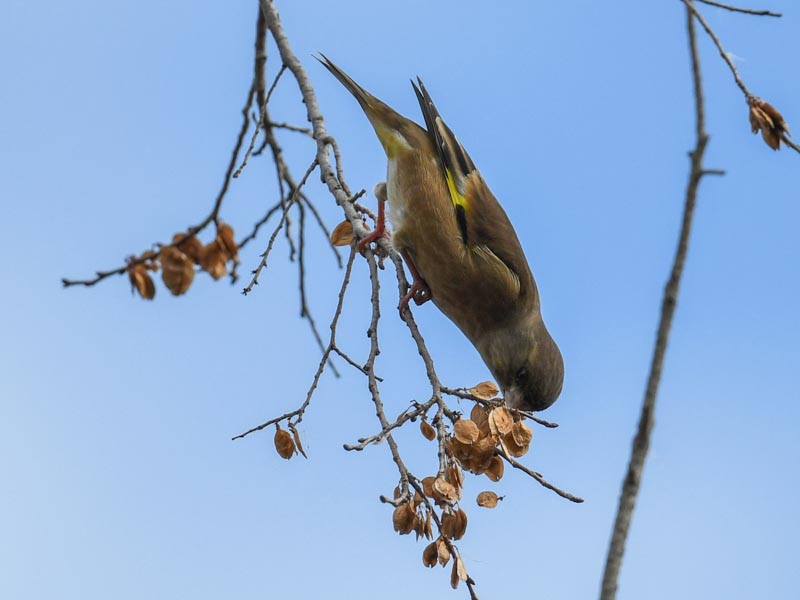
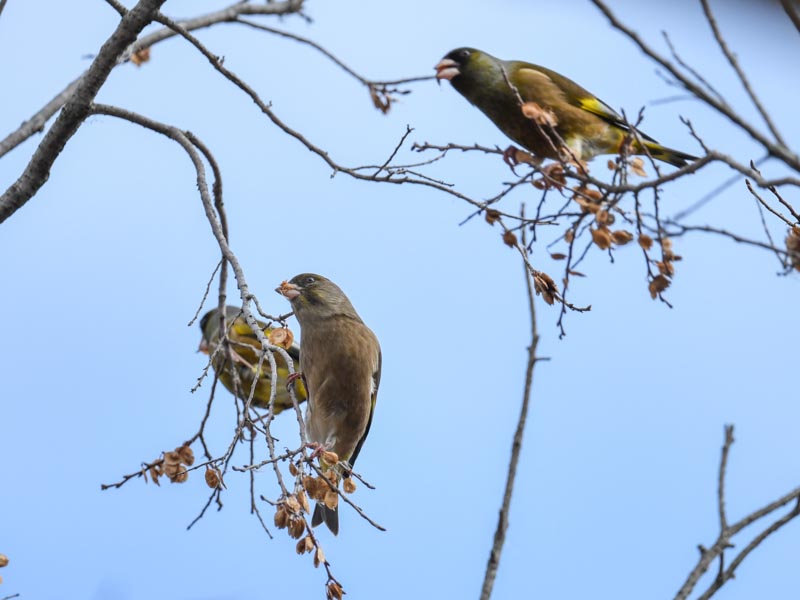
| No. 4 Male | 体色は全体が黄褐色。頭部から肩にかけてやや薄緑灰色がかる。 スズメよりやや大きく見えた。 The entire body color is yellowish brown. The head and shoulders are slightly greenish-gray. It looked slightly larger than a sparrow. | 白い外周幅は5個体中で2番目に広く目立つ。 The white outer periphery is the second widest among the five individuals and stands out. | 2024年1月22日。 冬に水元公園のアキニレの実に集まった3羽のグループの1羽。 曇り空背景写真なので色調は明瞭でない。 January 22, 2024. This bird is one of a group of three that gather on the elms in Mizumoto Park in winter. The color tone is not clear because the photo is against a cloudy sky. |
このカワラヒワはどちらだろうか?曇り空背景写真なので色調は明瞭でない。野鳥の体色は、直射日光、日陰、光の方向で羽衣の色合いや濃さが変わって見える。羽毛にある微細な構造によって生じる構造色の影響が大きい種(カワセミなど)もある。冬鳥であるヨシガモ(オス)の頭部は輝く緑色に見えるが、光の方向によっては黒っぽく見える。今回のカワラヒワを見た季節は冬であり、三列風切の白い外周幅はNo. 1とNo. 2より広く目立つ、また、スズメよりやや大きく見えたのでオオカワラヒワ[3]または渡り性のカワラヒワ[4]ではなかろうか。
Which one are these Oriental Greenfinches? The color tone is not clear because the photo is against a cloudy sky. The body color of wild birds appears to change in the hue and density of their plumage depending on direct sunlight, shade, and the direction of the light. In some species (such as the kingfisher), the structural color produced by the micro-structures in their feathers has a large effect. The head of the male Falcated duck, a winter bird, appears bright green, but depending on the direction of the light, it appears black. The season I saw the Oriental Greenfinches this time was winter, the white outer circumference is the second widest among the 4 individuals and stands out, and they looked a little bigger than sparrows, so I thought they were Grey-capped Greenfinches[3] or migratory Greenfinches.[4]
亜種オオカワラヒワまたは渡り性のカワラヒワ, Subspecies C. s. kawarahiba (Grey-capped Greenfinch) or migratory C. s. minor
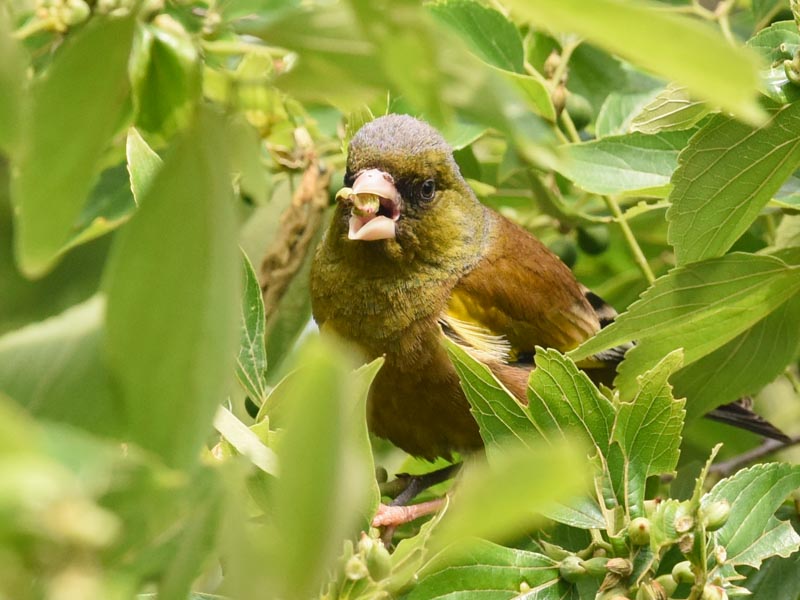
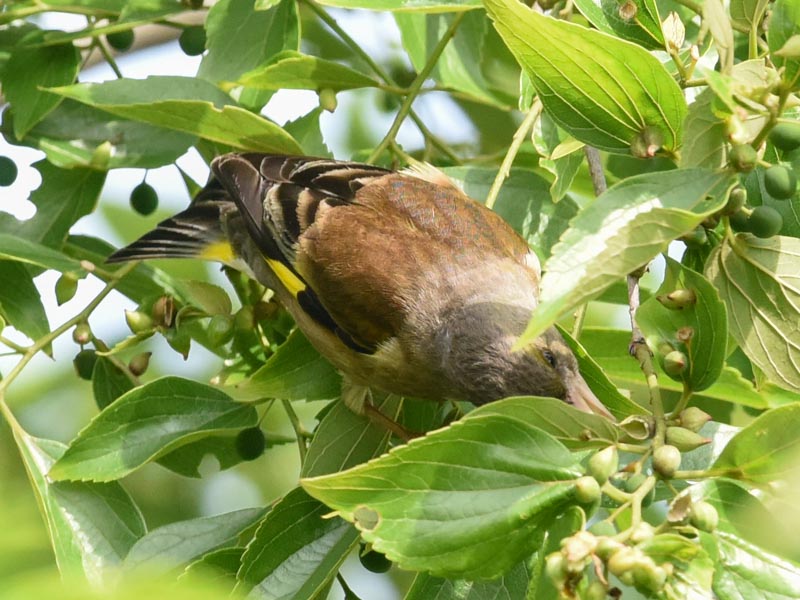
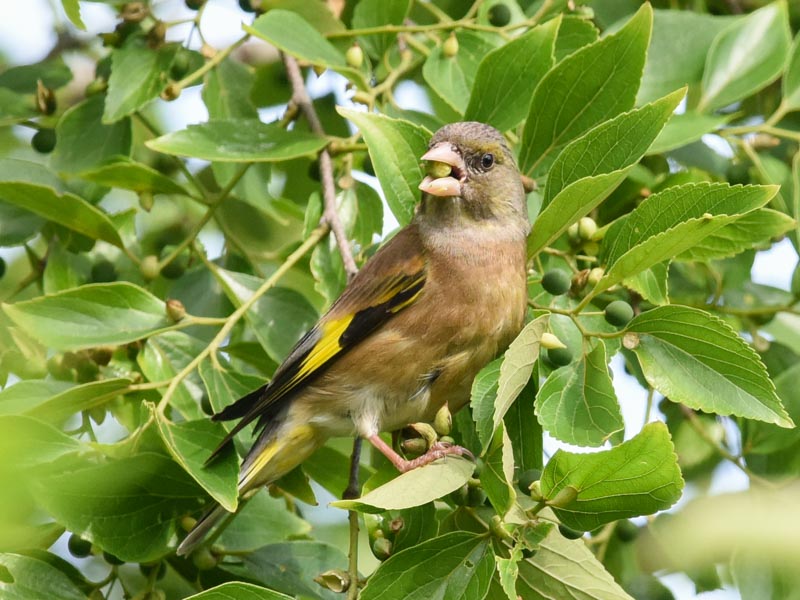
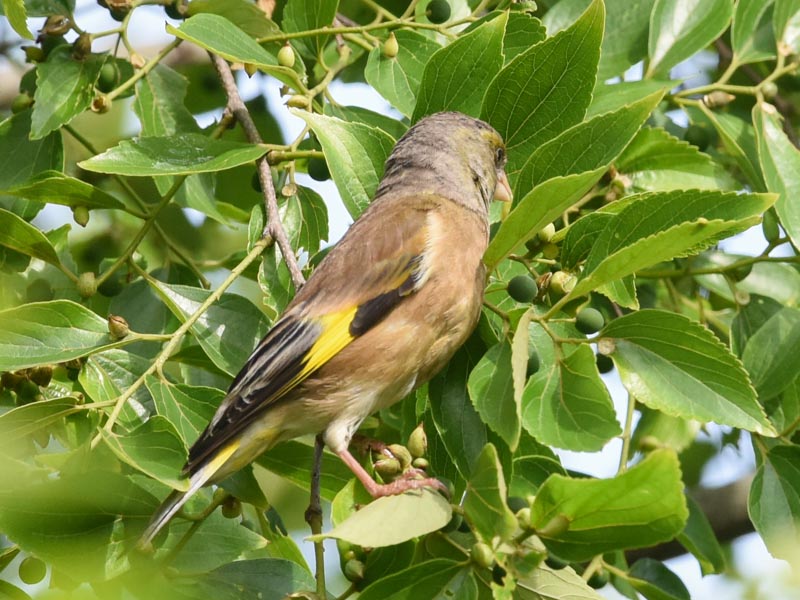
| 体の特徴 Body characteristics | 三列風切 Tertial pattern | 観察日、生息地域 、備考 Observation date, habitat area, and notes | |
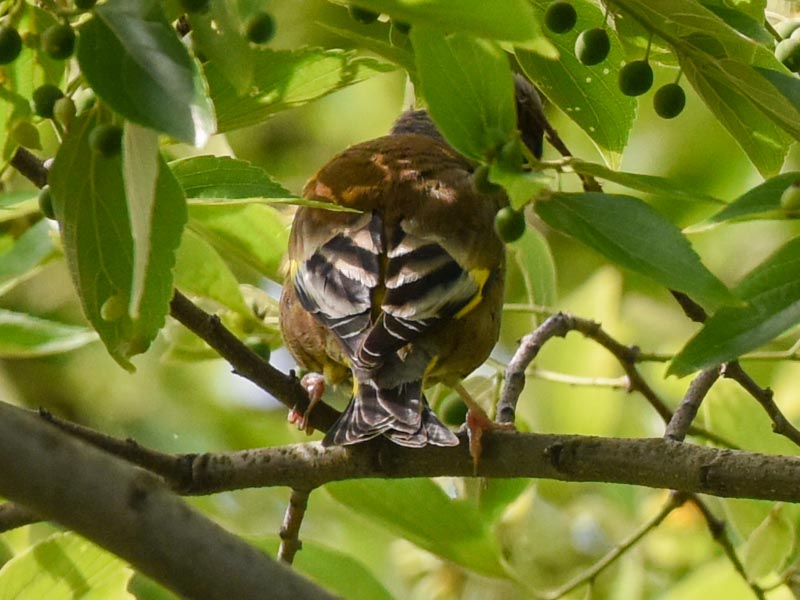
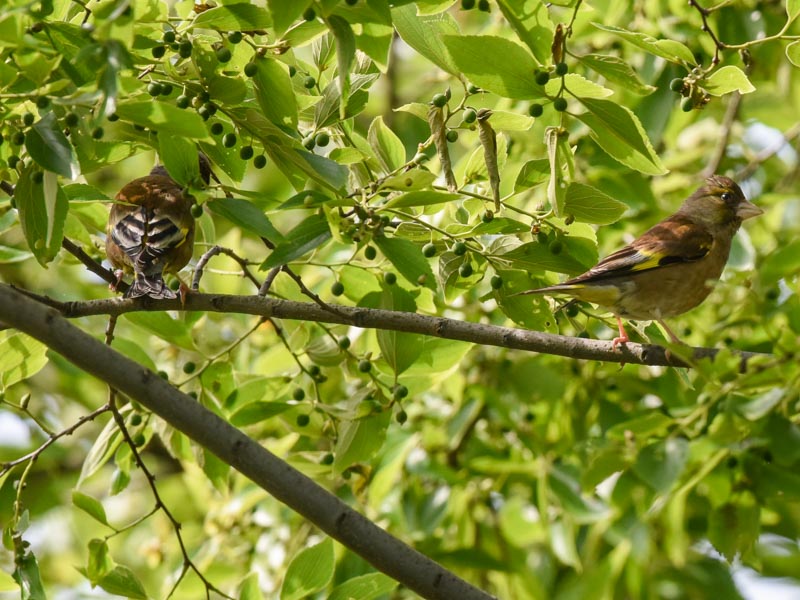
| No. 5 | 体色は全体が黄褐色。頭部から肩にかけてやや薄緑灰色がかる。 スズメよりやや大きく見えた。 The entire body color is yellowish brown. The head and shoulders are slightly greenish-gray. It looked slightly larger than a sparrow. | 白い外周幅はNo. 4と類似。 The white outer periphery is similar to that of No. 4. | 2017年5月16日。 春に水元公園のエノキの実に集まった数羽のグループ。 May 16, 2017. A group of several birds that gather on the Chinese Hackberry in Mizumoto Park in spring. |
このカワラヒワはどちらだろうか?今回のカワラヒワを見た季節は春であり、三列風切の白い外周幅はNo. 1とNo. 2より広く目立つ、また、スズメよりやや大きく見えたのでオオカワラヒワ[3]または渡り性のカワラヒワ[4]ではなかろうか。
Which one are these Oriental Greenfinches? The season I saw the Oriental Greenfinches this time was spring, the white outer circumference is wider than that of No. 1 and No. 2, and they looked a little bigger than sparrows, so I thought they were Grey-capped Greenfinches[3] or migratory Greenfinches.[4]
References
- カワラヒワ, Wikipedia, https://ja.wikipedia.org/wiki/%E3%82%AB%E3%83%AF%E3%83%A9%E3%83%92%E3%83%AF
- Carduelis sinica subsp. minor (Temminck & Schlegel, 1848), https://www.gbif.org/species/6175369
- Carduelis sinica subsp. kawarahiba (Temminck, 1836), https://www.gbif.org/occurrence/2434193922
- Hiroshi Nakamura, Habitat differences among resident and migratory populations of Oriental Greenfinch Carduelis sinica groups in winter season, 1979 Volume 11 Issue 3 Pages 189-218, https://www.jstage.jst.go.jp/article/jyio1952/11/3/11_3_189/_article
- Chloris sinica minor, Ochiai Park, Aichi Prefecture, Japan, https://species.wikimedia.org/w/index.php?title=Chloris_sinica&uselang=ja